
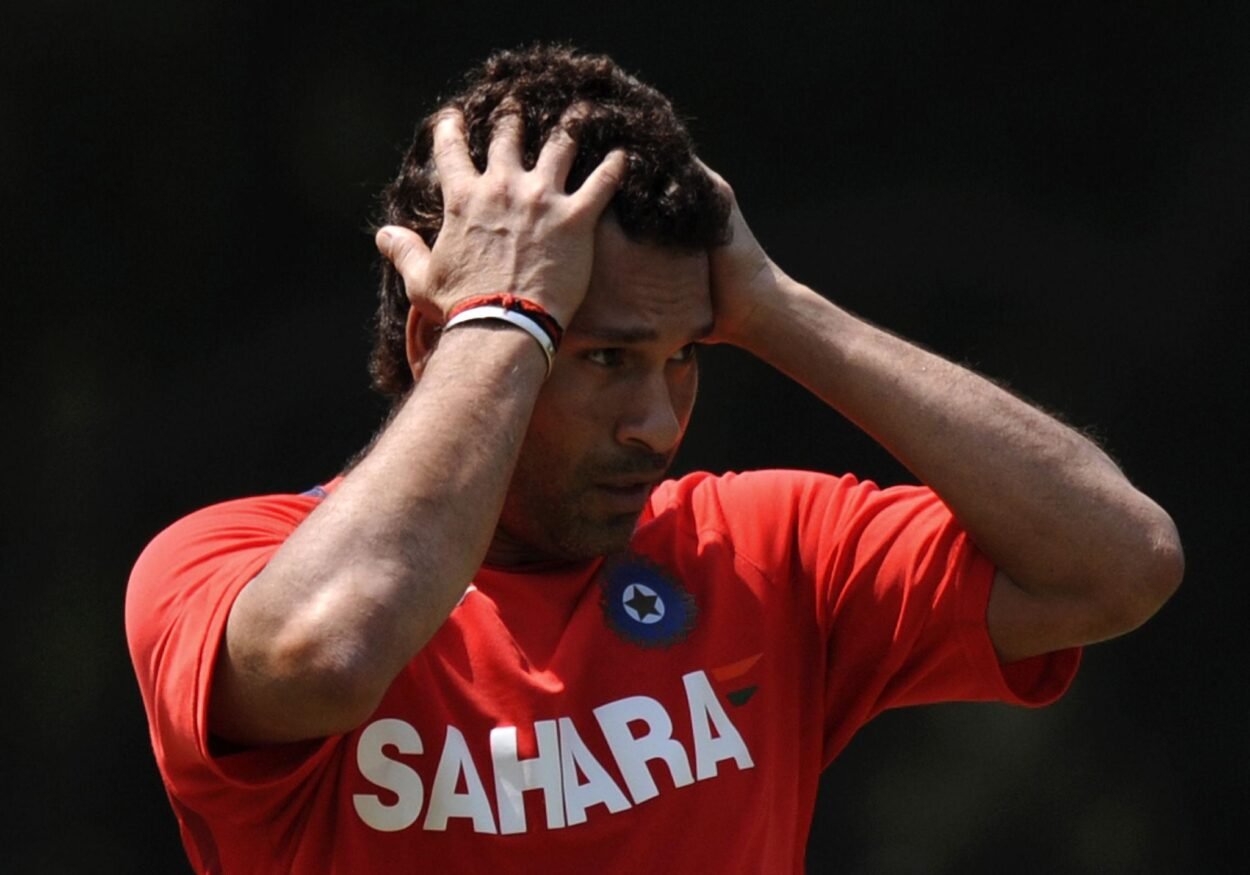
If you grew up in India in the 90s or early 2000s, you didn’t just watch Sachin Tendulkar. You lived him. Cricket schedules shaped family routines. TVs were turned on early, prayers were said quietly, and relatives suddenly became superstitious experts. When Sachin batted, India collectively held its breath.
That emotional bond is hard to explain to anyone who didn’t grow up here. Sachin wasn’t just a cricketer. He was stability in a chaotic country. A rare constant in uncertain times. And maybe that’s why even today, talking honestly about him feels… strange. Almost wrong.
This is not a tribute. It’s not a takedown either. It’s more like a fan thinking out loud, years later, wondering what exactly we built around one man—and what it did to us.
The Cricketer Was Real. The Burden Was Unreal.
Let’s get this straight early: Sachin Tendulkar the cricketer was extraordinary. Technique, timing, temperament. Against pace, spin, pressure, expectation. He earned his runs.
But Sachin the symbol? That was something else entirely.
We didn’t just expect him to score runs. We expected him to fix our mood. Our ego. Sometimes even our self-respect as a nation. A bad day for Sachin felt like a bad day for India. A century felt like personal validation.
Was that fair to him? Probably not.
Was it healthy for us? Definitely not.
This is where the Sachin Tendulkar myth vs reality conversation becomes uncomfortable. Because the myth required him to be flawless. Human errors didn’t fit the story.
One Man, An Entire Generation’s Emotional Baggage
Indian cricket idol culture has always been intense, but Sachin’s era was something else. Liberalisation, cable TV, global comparison. We were finding ourselves as a country, and somehow we decided one man with a bat would carry that emotional weight.
Losses were forgiven if Sachin scored. Wins felt incomplete if he didn’t.
Think about that for a second.
What kind of pressure is that?
As fans, we talk about the stress he faced. But we rarely talk about what it did to us. The emotional dependency. The weekly rollercoaster. The way other players faded into background noise because our eyes followed only one wicket.
When Sachin got out early, the match felt… empty. Even if India was still fighting.
Media Didn’t Just Cover Him. It Protected Him.
This is where Sachin Tendulkar criticism becomes tricky. Not because criticism wasn’t possible—but because it wasn’t allowed.
Sports media in India didn’t treat Sachin as a player to be analysed. He was treated like a national asset that needed protection. Bad form was “a phase.” Failures were “character-building.” Questions about retirement were “disrespectful.”
Other players were dropped ruthlessly. Sachin was waited for.
Was that loyalty? Or was it fear of public backlash?
There was barely any space for neutral discussion. Either you worshipped him or you were labelled bitter, ungrateful, anti-national, sometimes even “anti-cricket.”
That lack of critical space didn’t just affect Sachin’s legacy. It shaped how Indian sports discourse works even today.
Why Criticising Legends Feels Like a Crime
In India, questioning legends is seen as moral failure. Especially cricketing ones.
Why?
Because we tie achievement to gratitude. Sachin gave us joy, so we owe him silence. That’s the unspoken deal. But gratitude doesn’t mean intellectual surrender.
You can respect what someone achieved and still ask questions. You can love a player and still feel tired watching him struggle on when maybe the time had passed.
Many fans felt it. They just didn’t say it out loud.
That quiet discomfort is a big part of the Sachin Tendulkar legacy. Not the runs, but the silence around the decline.
From Cricketer to Brand: Something Shifted
Post-retirement Sachin feels very different.
The endorsements. The speeches. The curated appearances. The cautious statements. The safe positions. Somewhere along the way, Sachin the spontaneous cricketer became Sachin the brand image.
That’s not wrong. It’s understandable. Fame at that scale demands structure.
But for fans who grew up with the raw, emotional version—the teenager smashing bowlers, the man carrying a broken nation’s hopes—it feels distant. Sanitised.
The brand can’t afford contradictions. The person probably had many.
And maybe that’s where the emotional gap started forming.
Pride, Love, and a Strange Kind of Exhaustion
Here’s the confusing part: I still feel proud when I see him. Still smile at old highlights. Still remember exact shots from matches decades ago.
But I also feel tired.
Tired of the pedestal.
Tired of the silence.
Tired of the idea that loving Indian cricket means freezing Sachin in time and treating him as untouchable.
Why is it so hard to say: he was brilliant, but he wasn’t perfect?
Why does nuance feel like betrayal?
Sachin worship in India didn’t just celebrate greatness. It discouraged conversation.
The Cost of Making One Man Everything
By making Sachin the centre of everything, we also did something unfair to others. We delayed transitions. We confused team-building with sentiment. We struggled to let go.
Compare that to later generations. Dhoni. Kohli. Rohit. Loved, criticised, debated, questioned. Allowed to be human.
That shift didn’t happen because fans changed overnight. It happened because we were emotionally exhausted.
Sachin absorbed too much meaning. And when he left, Indian cricket had to relearn balance.
So Where Does That Leave Us?
Sachin Tendulkar doesn’t need defending. His numbers, moments, and impact are secure.
What maybe needs questioning is us. Our instinct to build gods instead of allowing legends. Our discomfort with saying “enough” without hatred. Our habit of confusing respect with silence.
This isn’t about tearing him down. It’s about stepping off the pedestal ourselves.
Because idol culture always demands a cost. From the idol. From the fans. From the game itself.
And maybe the real legacy of Sachin Tendulkar isn’t just how beautifully he played cricket—but how much he reveals about our need to believe, worship, and avoid difficult conversations.
There’s no final judgment here. No verdict.
Just a lingering question.
Did we truly let Sachin be a cricketer…
or did we need him to be something more than human?
Leave a Comment