


Wimbledon 2026 Men’s Singles: Every Unmissable Match This Fortnight
The Grass Court Stage Is Set Wimbledon 2026 opened its gates on 22 June and the All England Club has wasted no time delivering the drama that makes this Grand Slam the most celebrated in the...


The Grass Court Stage Is Set
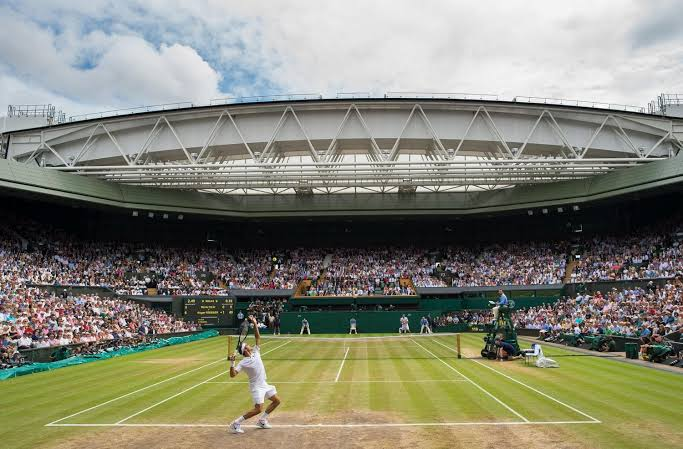
Wimbledon 2026 opened its gates on 22 June and the All England Club has wasted no time delivering the drama that makes this Grand Slam the most celebrated in the sport’s calendar. From the very first qualifier contests through to the staggering early-round encounters on Centre Court, this fortnight has already produced headlines that will be replayed for decades.
Table Of Content
- The Grass Court Stage Is Set
- Why 2026 Is a Historic Wimbledon Year
- The Top Seeds and Their Wimbledon Credentials
- Seeds One Through Four: The Expected Champions
- Seeds Five Through Eight: The Danger Zone
- Today’s Qualifier Matches: Analysis
- Court 2 — Z. Piros vs. B. Harris, 3:30 PM
- Court 6 — A. Galarneau vs. O. Tarvet, 3:30 PM
- Court 18 — F. Coria vs. S. Sakellaridis, 3:30 PM
- The Path to the Semi-Finals
- Serve Speed and Statistics: The Numbers So Far
- What the Second Week Will Demand
- Frequently Asked Questions
- When does Wimbledon 2026 end?
- How many sets is the men’s singles at Wimbledon?
- What is a cricbet99 id and how does it work?
- Why do qualifiers perform so well at Wimbledon?
The men’s singles draw in 2026 is among the most competitively open in recent memory. Multiple former champions are competing in the later stages of their careers, a wave of players in their mid-twenties are peaking at exactly the right moment, and the qualifier bracket has introduced several wildcard threats who are making the established order extremely uncomfortable.
For fans who want the full picture — live match data, serve statistics, player form guides, and draw analysis — setting up your cricbet99 id gives you access to a comprehensive tennis tracking environment that turns passive viewing into active, data-driven engagement with the tournament.
Why 2026 Is a Historic Wimbledon Year
Several factors combine to make Wimbledon 2026 stand out even within its extraordinary historical tradition. The transition generation of players — those who grew up watching the ‘Big Three’ dominate Grand Slams — has arrived with the maturity and grass-specific preparation to finally capitalise on the space created by those legends’ reduced activity.
The result is a men’s draw where five different players could plausibly lift the trophy on 12 July, and where the path to the final looks genuinely navigable for seeds positioned as low as 12th. That kind of competitive openness has not been seen at Wimbledon since the early 2000s.
Surface preparation at Wimbledon 2026 has also produced courts that are slightly slower than in previous years — a deliberate choice to extend rally lengths and reward the increasing baseline excellence of the modern game, while still preserving the serving advantage that makes Wimbledon unique among Grand Slams.
The Top Seeds and Their Wimbledon Credentials
Seeds One Through Four: The Expected Champions
The top four seeds carry the weight of expectation that comes with being the tournament’s highest-ranked entrants. All four have previously reached at least the quarter-finals at Wimbledon, and three have won at least one Grand Slam title elsewhere. On grass, their combination of serve power, movement quality, and mental resilience under pressure makes them the likeliest route to the final.
None arrived having deep-run Roland Garros — a tactical choice that reflects the seriousness with which the modern elite treats Wimbledon preparation. Entering the tournament fresh is arguably more valuable than carrying extra clay court ranking points into the grass season.
Seeds Five Through Eight: The Danger Zone
The second group of seeds presents perhaps the most fascinating section of the draw. These four players are capable of beating anyone on their best day on grass, but each carries a vulnerability that top seeds and well-prepared qualifiers can exploit. One has a second serve that becomes a genuine liability when first-serve percentages drop under pressure. cricbet99 green app download Another has limited experience on Centre Court, where the unique acoustic atmosphere creates psychological demands that outer courts do not replicate.
Using your cricbet99 id to access this tournament’s detailed form breakdowns will reveal precisely these differential statistics — the kind of analysis that separates informed watching from scorecard refreshing.
Today’s Qualifier Matches: Analysis
Court 2 — Z. Piros vs. B. Harris, 3:30 PM
Hungary’s Zsombor Piros faces British qualifier Ben Harris on Court 2 — historically nicknamed ‘The Graveyard of Champions’ for the volume of upsets it has generated. Harris, seeded 23rd in the qualifier bracket, owns a first serve that regularly exceeds 200 km/h and generates automatic points on the fast grass surface.
Piros is the tactical underdog here. His game centres on intelligent angle creation and deceptively heavy second serves that trouble opponents expecting a routine second-ball opportunity. If he can maintain first-serve accuracy above 60% and force Harris into third-set scenarios where physical reserves become decisive, this match is considerably more even than the seeding suggests.
Court 6 — A. Galarneau vs. O. Tarvet, 3:30 PM
Canada’s Alexis Galarneau has shown measurable improvement on grass through the 2026 season — his net approach rate in warm-up tournaments jumped to 35%, an aggressive posture that generates disproportionate point-winning efficiency on fast surfaces. Tarvet is a serve-first British player whose game peaks when first-serve percentages hold above 65%. Below that threshold, Galarneau’s return aggression becomes the deciding variable.
Court 18 — F. Coria vs. S. Sakellaridis, 3:30 PM
Court 18 — famous worldwide for the Isner-Mahut match in 2010 — hosts Argentina’s Federico Coria against Greece’s Stefanos Sakellaridis. Coria’s clay court background initially makes him an unlikely grass court threat, but his game has evolved significantly. His construction of points through intelligent ball placement rather than raw power suits Court 18’s intimate, tactical environment.
The Path to the Semi-Finals
With the first-week matches completed, the projected semi-final combinations at Wimbledon 2026 have taken clearer shape. The bottom half of the draw — where two top-eight seeds have already been eliminated — is now navigable for at least three players seeded outside the top ten.
The upper half remains dominated by the top seeds, but the qualifier results today could reshape that section entirely. A qualifier who wins on Court 2 this afternoon faces a favourable Round 2 draw that, if the results continue to fall correctly, could take them deep into the second week.
Tracking this evolving picture through your cricbet99 id — with the platform’s live draw update and form guide tools — is the most efficient way to stay ahead of the tournament narrative rather than catching up through post-match news.
Serve Speed and Statistics: The Numbers So Far
Wimbledon 2026 is producing exceptional serve speed data. The fastest serves in the men’s draw have already exceeded 230 km/h in first-round matches, and the average first-serve speed across the draw sits at 198 km/h — marginally above 2025’s equivalent figure. The average first-serve percentage of 64.2% reflects the balancing act players perform between maximising power and maintaining court accuracy.
Ace rates are particularly high in the 2026 men’s draw — the tournament leader has already recorded 47 aces across two matches, on pace for a tournament total that would approach record territory. For context, the Wimbledon ace record in a single tournament stands at 112. The leader’s current trajectory would require consistency through five more matches, but the statistical foundation is clearly present.
What the Second Week Will Demand
The second week of Wimbledon is where tennis talent alone ceases to be sufficient. Physical conditioning, emotional resilience, and the ability to perform under the specific pressure of a Grand Slam quarter-final — where careers, rankings, and legacies are genuinely at stake — determine who progresses.
Players who have prioritised physical preparation through June, managed their clay season workloads intelligently, and arrived at the second week without accumulating injury stress will have a significant advantage over those who peaked in the first week and are now managing physical depletion through to the finish.
Frequently Asked Questions
When does Wimbledon 2026 end?
Wimbledon 2026 concludes on 12 July 2026 with the men’s singles final on Centre Court.
How many sets is the men’s singles at Wimbledon?
Men’s singles at Wimbledon is played best of five sets, requiring three sets to win. The final set uses a match tiebreak at 12–12 rather than the standard 6–6 tiebreak used in earlier sets.
What is a cricbet99 id and how does it work?
A cricbet99 id is a unique user identifier on the cricbet99 platform that gives registered users access to live sports statistics, player profiles, tournament tracking, and personalised match analysis tools.
Why do qualifiers perform so well at Wimbledon?
Qualifiers at Wimbledon compete on grass before the main draw begins, giving them surface-specific match time that many seeded players, transitioning from clay, have not yet accumulated. This physical and psychological advantage makes qualifiers disproportionately dangerous in the early rounds.