



Future of AI Companions: Market Growth Trends Projected Through 2035
Artificial intelligence has moved far beyond simple automation. Digital companions are now becoming a meaningful part of everyday life, giving users a more personalized way to communicate, learn, and...

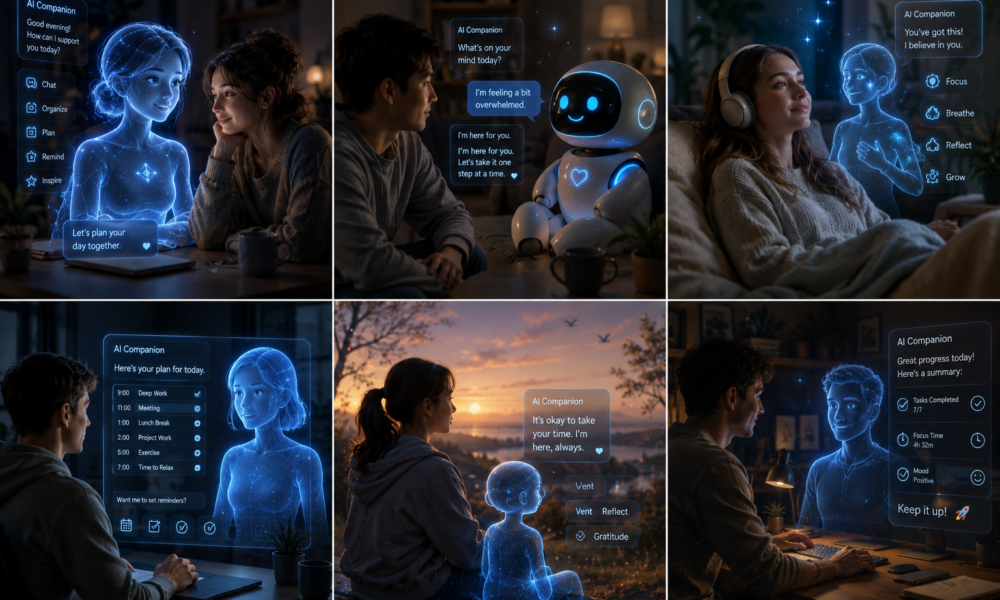
Artificial intelligence has moved far beyond simple automation. Digital companions are now becoming a meaningful part of everyday life, giving users a more personalized way to communicate, learn, and spend time online. Instead of responding with generic answers, modern AI companion can remember conversation context, adapt to individual preferences, and provide interactions that feel more natural over time.
Table Of Content
- Personalization Will Continue Shaping User Expectations
- Better Language Models Are Creating More Natural Conversations
- Visual Experiences Will Become More Interactive
- Stronger Privacy Practices Will Build Greater User Confidence
- Competition Will Encourage Better User Experiences
- AI Companions Will Become Part of Everyday Digital Life
- Creative Platforms Will Continue Expanding Their Communities
- Consumer Expectations Will Continue Rising
- Responsible Innovation Will Shape Long-Term Success
- What the Market Could Look Like Through 2035
- Conclusion
Personalization Will Continue Shaping User Expectations
One of the biggest reasons behind the growing interest in AI companions is personalization. Users no longer want conversations that sound repetitive or robotic. Instead, they appreciate systems capable of remembering previous discussions, adapting communication styles, and responding with greater relevance.
Initially, personalization focused mainly on selecting names or avatars. Today, developers are building much deeper interaction systems. Emotional awareness, long-term memory, preferred conversation styles, and adaptive personalities are becoming increasingly important for creating satisfying user experiences.
Similarly, improvements in natural language processing are helping AI companions respond with greater accuracy. Conversations feel smoother because systems can interpret context instead of relying only on isolated questions. This creates a stronger sense of continuity, making interactions feel less mechanical.
As competition grows, companies that invest in better personalization will likely remain ahead of those offering generic conversational experiences.
Better Language Models Are Creating More Natural Conversations
Language models have improved significantly during the last few years. Responses are becoming more coherent, context-aware, and capable of maintaining longer conversations without losing consistency.
However, future development is expected to focus on quality rather than simply producing longer replies. AI companions will become better at recognizing user intent, adjusting tone, and responding appropriately across different situations.
These improvements also reduce frustration. Instead of repeating information multiple times, users can expect conversations that build naturally from previous interactions. Consequently, satisfaction levels are likely to improve as dialogue becomes increasingly realistic.
Developers are also investing in multilingual capabilities, allowing AI companions to communicate naturally with people from different regions. This wider accessibility supports continued growth across international markets.
Visual Experiences Will Become More Interactive
Text conversations remain important, but visual interaction is becoming equally valuable. Users increasingly enjoy creating personalized characters, digital avatars, and customized artwork that reflects their preferences.
Creative tools continue expanding beyond simple image generation. Modern systems can produce expressive portraits, artistic styles, and customized digital identities within seconds. As a result, visual creativity is becoming a central part of companion platforms instead of serving as an additional feature.
Many users also appreciate creative tools connected with an adult image generator, allowing personalized artwork to match individual preferences while remaining within the platform’s content policies. This broader creative capability contributes to stronger engagement because users participate in building their own digital experiences rather than simply consuming content.
Meanwhile, improvements in image quality, rendering speed, and editing controls continue making visual creation faster and more accessible for a wider audience.
Stronger Privacy Practices Will Build Greater User Confidence
Trust remains one of the most important factors influencing long-term adoption. People share conversations, preferences, and personal interests while interacting with AI companions. Consequently, expectations surrounding privacy continue increasing.
Developers are investing more effort in transparent data handling, user-controlled settings, and stronger security practices. Clearly written privacy policies also help users understand how conversations are processed and protected.
Despite growing technological capabilities, responsible development remains equally important. Companies focusing on transparency are more likely to earn lasting confidence than those emphasizing innovation alone.
In comparison to earlier generations of conversational software, modern AI platforms are placing greater emphasis on user control. Options to manage conversation history, customize privacy preferences, and limit stored information are becoming valuable parts of the overall experience.
Competition Will Encourage Better User Experiences
Growing market interest naturally encourages stronger competition. New developers continue introducing innovative ideas while established companies improve existing products.
This healthy competition benefits users in several ways. Better conversation quality, improved customization, faster response times, and richer creative options become priorities as companies compete for long-term engagement.
Xchar AI represents this competitive direction by focusing on personalized conversations combined with creative interaction tools. Rather than limiting engagement to simple messaging, platforms continue expanding the variety of experiences available to users.
AI Companions Will Become Part of Everyday Digital Life
AI companions are gradually becoming more than conversation tools. They are expected to assist with daily planning, creative activities, language practice, entertainment, and personal productivity. As digital services become more connected, companion technology will interact with calendars, smart devices, and communication apps to provide a smoother user experience.
Similarly, voice technology continues improving alongside conversational AI. Speaking naturally with a digital companion may soon become as common as typing messages today. Faster processing and better contextual awareness will make voice interactions feel more comfortable and responsive.
Developers are also focusing on emotional intelligence without attempting to replace genuine human relationships. Instead, the objective is to create helpful digital experiences that respond thoughtfully while respecting user preferences and boundaries.
Creative Platforms Will Continue Expanding Their Communities
The popularity of AI companions is also encouraging larger online communities where users exchange ideas, create characters, and share creative experiences. Community participation often helps platforms improve because user feedback influences future updates and new capabilities.
In the same way, personalization encourages longer engagement. People enjoy refining conversations, adjusting character personalities, and creating digital identities that reflect their interests. This ongoing interaction creates stronger connections between users and the platform itself.
Xchar AI continues to reflect this direction through personalized conversations and creative customization, allowing users to shape experiences according to their individual preferences instead of relying on fixed interaction models.
As communities continue growing, developers will place greater attention on moderation, safety, and respectful interactions so that users can enjoy engaging conversations within a positive environment.
Consumer Expectations Will Continue Rising
Technology rarely stands still, and user expectations evolve alongside every new improvement. Faster responses alone will no longer be enough. People will increasingly expect companions that remember context, communicate naturally, and adapt to changing preferences over time.
Despite these higher expectations, simplicity will remain essential. Users generally prefer intuitive interfaces that allow conversations to begin immediately without unnecessary complexity.
Many people also look for a personalized AI girlfriend experience that feels conversational rather than scripted. This growing interest reflects a broader demand for AI companions capable of maintaining engaging dialogue while adapting naturally to different personalities and communication styles.
Consequently, developers who balance personalization, privacy, usability, and creativity are likely to earn stronger long-term engagement than those focusing on only one aspect of the experience.
Responsible Innovation Will Shape Long-Term Success
Technology growth depends not only on innovation but also on responsible development. Companies investing in transparency, user safety, and reliable performance are more likely to build lasting trust.
Clearly written policies, regular platform improvements, and responsive customer support all contribute to a better overall experience. Likewise, continuous testing helps improve conversation quality while reducing inaccurate or confusing responses.
Xchar AI reflects the industry’s movement toward combining intelligent conversations with creative tools while maintaining a user-focused experience. As expectations continue increasing, responsible product development will remain a key factor influencing market success.
Developers are also expected to improve accessibility, making AI companions easier to use across different devices, operating systems, and languages. This wider availability supports broader adoption without creating unnecessary barriers for new users.
What the Market Could Look Like Through 2035
The years leading to 2035 are likely to bring continued refinement rather than dramatic overnight changes. Better conversational intelligence, improved personalization, stronger privacy protections, and richer creative experiences are expected to become standard rather than exceptional.
Meanwhile, competition will continue encouraging innovation across the industry. Companies will invest in improving response quality, expanding creative capabilities, and simplifying the overall user experience.
Xchar AI illustrates how modern platforms are adapting to these changing expectations through conversational experiences that combine personalization with creative interaction. As technology matures, platforms capable of balancing innovation with user satisfaction are expected to remain competitive in an increasingly active market.
Rather than replacing human interaction, AI companions are likely to become valuable digital assistants that complement communication, creativity, and entertainment in everyday life.
Also Read :- Advancing Emotional Intelligence in AI Companion User Experiences
Conclusion
AI companions are moving toward a future centered on meaningful conversations, thoughtful personalization, creative expression, and responsible innovation. Although technology will continue improving, long-term success will depend on creating experiences that users genuinely enjoy and trust.