

POE Encapsulants: Best Choice for TOPCon Solar Panel
Choosing the right materials for solar panels is more important than ever. As technology moves forward, we see better ways to catch sunlight and turn it into power. One of the biggest changes lately...

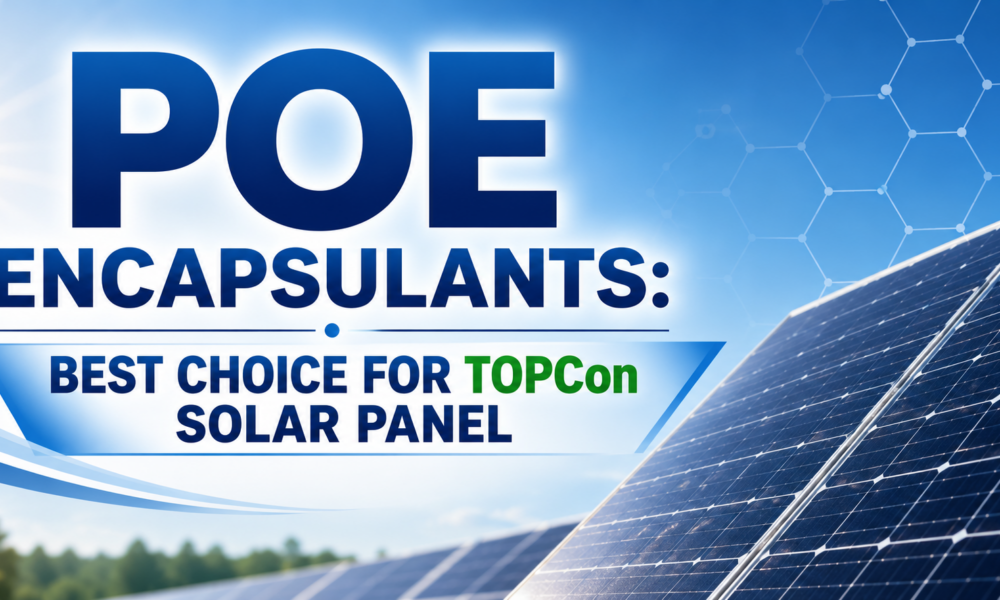
Choosing the right materials for solar panels is more important than ever. As technology moves forward, we see better ways to catch sunlight and turn it into power. One of the biggest changes lately is the rise of the topcon solar panel. These panels are great because they work very well even when the sun isn’t perfectly bright. However, to keep these high-tech panels working for twenty-five years or more, you need the right protection inside them.
Table Of Content
That protection comes from a special layer called an encapsulant. It is the glue that holds everything together and keeps the sensitive parts safe from the weather. For modern panels, POE Encapsulants have become the top choice for experts. In this guide, we will look at why this material is so special and why it is the perfect partner for the latest solar technology. If you want your investment in clean energy to last, understanding these inner layers is a great place to start.
What Is a POE Encapsulant?
A POE Encapsulant is a type of plastic film made from Polyolefin Elastomer. Think of it as a clear, tough skin that wraps around the solar cells. Its main job is to provide cushion and protection. Solar cells are very thin and can break easily. By sandwiching them between layers of POE, manufacturers make sure the cells stay in place and don’t crack when the wind blows or when snow sits on top of the panel.
Unlike older materials, POE Encapsulants are designed to be very stable. They do not change much when they get hot or cold, which is exactly what happens on a roof every single day. This material is also very clear, so it lets almost all the sunlight pass through it to reach the cells. Because it stays clear over time, the panel keeps making a lot of power even after many years in the sun. It is a smart, durable material that makes modern solar power possible.
Why is Solar POE popular for topcon solar panel?
The topcon technology is special because it uses very thin layers to help electricity flow better. But these thin layers are sensitive. If they get wet or touch the wrong chemicals, they stop working. This is why solar engineers have turned to POE. It provides a level of safety that older materials simply cannot match. It acts like a high-end security system for the cells inside.
When we look at why people choose POE Encapsulants for these specific panels, it comes down to reliability. A panel might look fine on the outside, but if the inside starts to fail, your power bill will go up. POE ensures that the high efficiency of the cells is protected from the day the panel is installed until the end of its life. Let’s look at the three main reasons why this material is winning the market.
1. Superior moisture barrier
Water is the biggest enemy of a solar panel. Even if you cannot see it, tiny bits of water vapor can try to wiggle their way inside the panel through the edges. If water reaches the solar cells, it causes corrosion. This is a major cause of solar module failure. POE Encapsulants are like a waterproof raincoat for the cells. They have a very low “water vapor transmission rate.”
In simple terms, this means they block water much better than older materials. For a high-efficiency topcon bifacial solar panel, which has glass on both sides, this protection is vital. Since water cannot get in, the panel stays dry inside, and the power output stays high for a much longer time. This saves homeowners and businesses a lot of money on repairs.
2. No acid formation
Many older solar panels used a material called EVA. While EVA is cheap, it has a big flaw: over time, it can break down and create acetic acid. You might know this better as the main ingredient in vinegar. When acid forms inside a solar panel, it eats away at the silver wires and the delicate surfaces of the cells. This is a major problem for advanced cells that rely on perfect surfaces to move electrons.
POE Encapsulants are different because they are chemically stable. They do not produce acid, even after years of being baked in the hot sun. This lack of acid means the internal components of the panel stay safe. Using POE is like choosing a storage box that won’t leak or rot. It keeps the environment inside the panel clean and safe, which is vital for maintaining high performance over the long haul.
3. High PID resistance
PID stands for Potential Induced Degradation. This is a fancy way of saying that electricity can sometimes leak out of the cells and go into the frame of the panel. When this happens, the topcon bifacial solar panel can lose a lot of its power-making ability. It is a silent killer of solar efficiency. POE has very high electrical resistance, which means it acts as a great insulator to stop this leakage.
Because POE Encapsulants don’t let electricity wander where it shouldn’t, the panel stays efficient. This is a huge benefit for large solar farms where panels are connected in long strings with high voltage. In these settings, the risk of PID is much higher. By using POE, owners can rest easy knowing their panels won’t suddenly drop in power output due to electrical leaks. It keeps the energy flowing in the right direction.
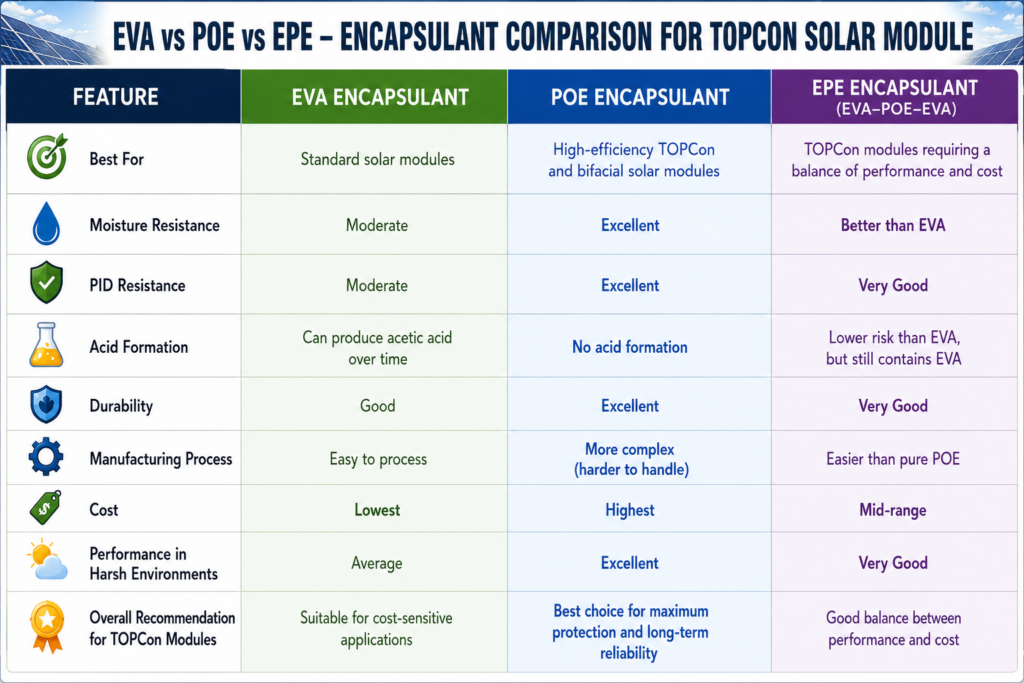
EVA vs POE vs EPE – Encapsulant comparison for topcon solar module
Raynex Solar: Leading the Charge in POE Encapsulants
Raynex Solar has become a trusted name in the industry by focusing on high-quality materials. They understand that a solar panel is only as good as the stuff holding it together. By providing top-tier POE Encapsulants, they help manufacturers build panels that truly last. Their products are tested in tough conditions to make sure they can handle extreme heat, heavy rain, and high electrical loads without breaking down.
Choosing Raynex Solar means choosing peace of mind. They use advanced manufacturing techniques to ensure every roll of encapsulant is consistent and clear. This dedication to quality helps solar companies lower their failure rates and provide better warranties to homeowners. As the world switches to cleaner energy, Raynex Solar is there to make sure that energy stays reliable and efficient for everyone.
Contact Raynex Solar
Address:
806, Sarthana Business Hub, Sarthana-Jakatnaka, Surat , Gujarat – 395006.
Phone:
+91 87586 12077
Conclusion
In the world of solar energy, the small details make a big difference. While most people only look at the glass or the frame, the encapsulant inside is what truly determines how long the panel will last. POE Encapsulants offer the best protection against moisture, acid, and power loss. They are the essential partner for any high-quality topcon solar panel installation.
By choosing the right materials today, you are protecting your energy future. Whether you are a homeowner or a large-scale developer, insisting on POE ensures that your solar system will keep producing clean power for years to come. Don’t settle for older technology when you can have the superior durability and performance of POE. It is the smart choice for a greener, more efficient world.
FAQs
1. Are POE Encapsulants more expensive than EVA?
Yes, POE generally costs more than EVA. However, because it prevents damage and helps the panel last longer, it usually saves money in the long run by preventing power loss and panel failure.
2. Can I use POE for older types of solar panels?
Yes, you can use POE for almost any type of solar panel. While it is required for high-efficiency panels like TOPCon, it will also improve the lifespan of standard Perc panels.
3. Why does acid formation matter in a solar panel?
Acid eats away at the metal connectors inside the panel. This leads to higher resistance, which means the panel gets hotter and produces less electricity. Eventually, the panel can fail completely.
4. Is EPE just as good as pure POE?
EPE is a good compromise, but it is not quite as good as pure POE. Pure POE offers the highest level of moisture and PID resistance because it doesn’t have any EVA layers that might degrade.
5. How long do POE Encapsulants last?
They are designed to last for at least 25 to 30 years. They are tested to withstand extreme UV light and temperature changes without turning yellow or cracking.